

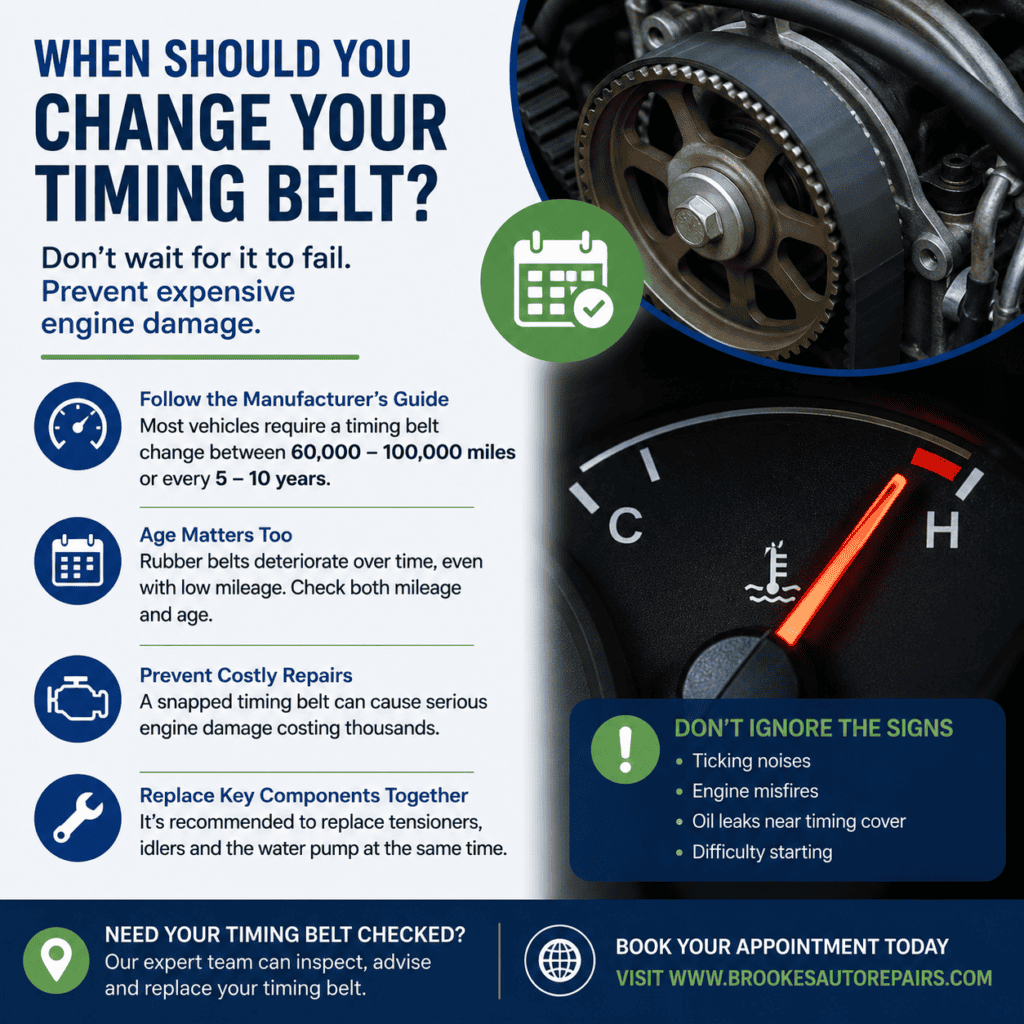
When Should You Change a Timing Belt?
Your timing belt is one of the most important components in your engine. Although it’s hidden from view, it plays a critical role in keeping the engine running correctly by synchronising the crankshaft and camshaft.
If a timing belt fails, the result can be severe engine damage — which is why replacing it at the right time is so important.
How Often Should a Timing Belt Be Changed?
There is no single replacement interval for every vehicle because timing belt schedules vary by manufacturer and engine type.
However, many vehicles require timing belt replacement somewhere between:
- 60,000 and 100,000 miles, or
- Every 5 to 10 years
Some newer vehicles may have longer intervals, while others require earlier replacement.
The safest option is always to follow the manufacturer’s recommended schedule found in:
- The owner’s handbook
- Service records
- Manufacturer maintenance schedules
Why Timing Belt Age Matters
Mileage is only part of the picture.
Timing belts are made from reinforced rubber, which naturally deteriorates over time even if the vehicle is driven very little.
That means:
- A low-mileage car can still need a timing belt replacement
- Older vehicles with infrequent use may still be at risk
For example, a vehicle that has only covered 40,000 miles but is 10 years old could still be overdue for a timing belt change.
What Happens if a Timing Belt Snaps?
In many engines, a snapped timing belt can cause catastrophic internal damage.
Possible damage includes:
- Bent valves
- Damaged pistons
- Cylinder head damage
- Complete engine failure
Repair costs after a snapped belt are often far higher than the cost of preventative replacement.
Warning Signs a Timing Belt May Need Attention
Timing belts often fail without much warning, but some vehicles may show symptoms beforehand.
Potential signs include:
Ticking or Clicking Noises
Unusual noises from the engine area can sometimes indicate belt or tensioner wear.
Engine Misfires
Incorrect timing may cause rough running or misfires.
Difficulty Starting
Worn timing components can affect engine timing and performance.
Oil Leaks Near the Timing Cover
Oil contamination can damage the belt over time.
Visible Cracking or Wear
If inspected during servicing, mechanics may spot cracking, fraying, or deterioration.
However, many timing belts show no obvious symptoms before failure — which is why preventative replacement is so important.
Should You Replace Other Parts at the Same Time?
Yes — most garages recommend replacing related components during timing belt replacement because the labour overlaps.
This often includes:
- Tensioners
- Idler pulleys
- Water pump (on many vehicles)
Replacing these parts together can help avoid future labour costs and reduce the risk of related failures later.
Timing Belt vs Timing Chain
Not all vehicles use timing belts.
Some engines use timing chains instead, which are metal and usually designed to last longer.
If you’re unsure which system your car uses, check:
- The owner’s manual
- Manufacturer service information
- A trusted local garage
Why It’s Worth Acting Early
Delaying timing belt replacement to save money can become far more expensive if the belt fails unexpectedly.
Changing the belt on schedule helps:
- Protect the engine
- Reduce breakdown risk
- Maintain reliability
- Avoid major repair bills
For drivers in the Swansea Valley and Ystradgynlais area, local garages such as Brookes Auto Repairs can inspect timing-related concerns, advise on replacement intervals, and carry out timing belt replacement work before problems develop into serious engine damage. (Brookesautorepairs)
Final Thoughts
A timing belt is a preventative maintenance item that should never be ignored.
Even if your car seems to be running perfectly, replacing the timing belt at the correct interval can prevent some of the most serious and expensive engine failures a driver can face.
If you’re unsure when your vehicle’s timing belt was last changed, it’s worth checking your service history or speaking with a trusted garage before the replacement window passes.