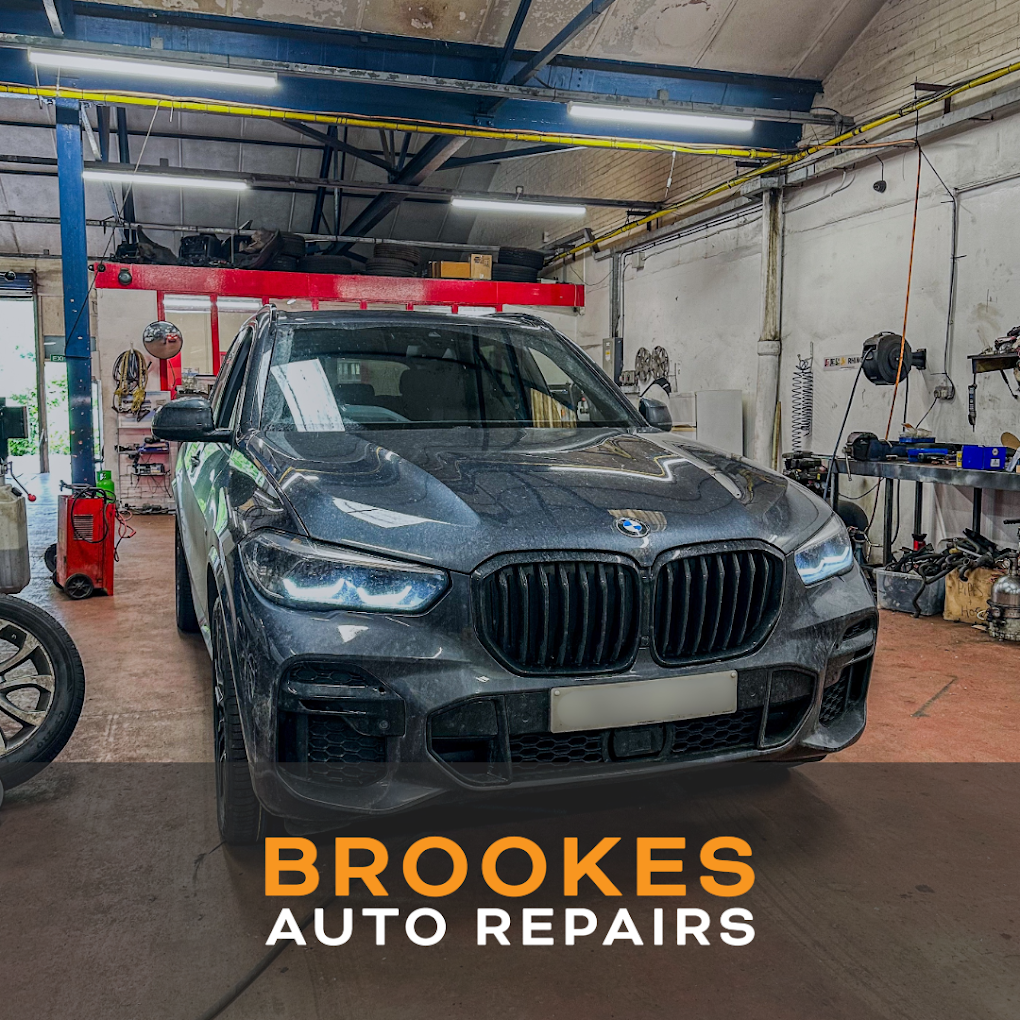

Headlight performance is a safety issue that is frequently underappreciated by drivers. The ability to see — and be seen — at night is fundamental to safe driving, yet headlight condition and alignment are rarely checked between MOTs. At Brookes Auto Repair, we find headlight-related issues on a significant proportion of the vehicles we inspect, and many drivers are genuinely unaware of how compromised their night-time visibility has become.
Polycarbonate Lens Oxidation
Modern headlight lenses are made from polycarbonate rather than glass — a choice that offers better impact resistance but comes with a significant disadvantage. Polycarbonate yellows and hazes over time when exposed to UV radiation, reducing light transmission substantially. A headlight that appears undamaged may be transmitting only a fraction of the light that a clear lens would allow through. Headlight restoration — a professional process of sanding, polishing, and sealing the lens surface — can restore clarity and is significantly cheaper than lens replacement.
Headlight Alignment
Headlights that are aimed incorrectly — too high, too low, or pointing in the wrong direction — are both a safety problem and an MOT failure point. Headlights aimed too high dazzle oncoming drivers; headlights aimed too low illuminate only the road immediately in front of the vehicle, reducing reaction time significantly. Alignment should be checked after any work involving the front of the vehicle and after any significant impact such as a collision or kerb strike.
Bulb Condition and Type
Halogen bulbs degrade gradually over their service life — they produce progressively less light as the tungsten filament wears. A bulb that has not failed but has been in service for several years may be producing significantly less light than a new equivalent. Replacing halogen bulbs in pairs when one fails ensures consistent lighting across both sides. LED and HID upgrades can improve light output substantially but must be fitted as a system — not as a direct bulb swap in a housing designed for halogen.
Condensation Inside the Lens
Moisture inside a headlight unit indicates a failed seal — either around the lens or at a cable entry point. Beyond the cosmetic issue, moisture inside the unit causes premature bulb failure and can cause electrical problems in the headlight circuit. Replacement or resealing of the unit is required.
For headlight restoration, bulb replacement, and alignment, contact Brookes Auto Repair at brookesautorepair.com.