
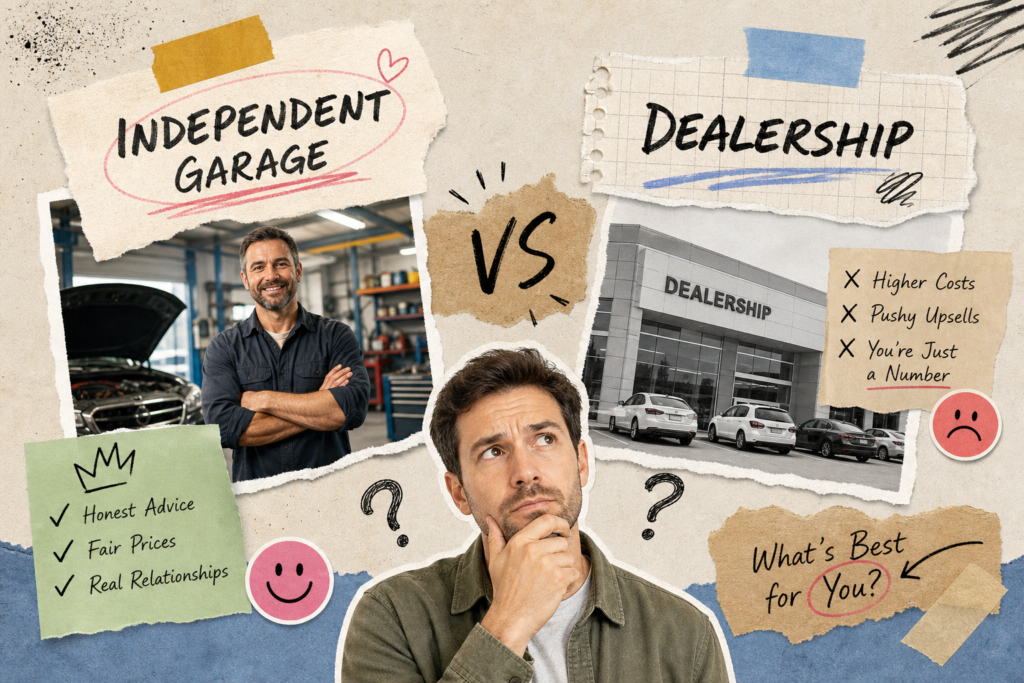
Many drivers use dealerships out of habit, or because of a vague fear that going elsewhere will somehow void their warranty and cost them more in the long run. Neither of those things holds true for the vast majority of car owners. So if you’ve been wondering whether an independent garage is better than a dealership for car repairs, the answer depends on your car and circumstances, but for most drivers, the independent wins. By the end of this article you’ll know exactly which option suits your situation and what to look for in a garage you can actually trust.
For most drivers with out-of-warranty cars, a reputable independent garage is the stronger choice: better pricing, more personal service, and real accountability. Garages like Brookes Auto Repairs in South Wales show that dealer-quality expertise doesn’t require dealer-level overheads. But the full picture is more nuanced than a simple winner-takes-all verdict, so here’s the full breakdown.
The cost gap between independent garages and dealerships
The gap exists because of structure, not skill. Independent garages carry lower overheads: no manufacturer franchise fees, no branded showrooms, no corporate sales targets baked into every job. That translates directly into lower labour rates. In 2026, independent garages in the UK typically charge between £70 and £85 per hour, while main dealers charge £100 to £141 per hour, and in urban areas that figure can go higher still.
On a real job, those hourly differences add up fast. For a typical mid-range hatchback like a VW Golf or Ford Focus, here’s what the numbers look like across three common services:
- Oil change: £100 to £180 at an independent, versus £150 to £250 at a dealer
- Front brake pads: £180 to £300 at an independent, versus £250 to £400 at a dealer
- Timing belt replacement: £450 to £750 at an independent, versus £600 to £1,000 or more at a dealer
Savings typically average 25 to 40 percent per job, with labour driving most of the difference. Parts play a role too: independents access a wider range of suppliers and can source OEM-equivalent components at around 10 to 20 percent less than dealer-priced branded parts, without compromising quality.
That said, dealer pricing isn’t always unjustified. For vehicles still under manufacturer warranty, for recall work, or for brand-specific software tasks on newer models, dealers have access that independents don’t. That’s worth acknowledging plainly, and we’ll come back to it.
The warranty myth that keeps drivers overpaying
The most persistent misconception in the automotive world is this: using an independent garage voids your manufacturer’s warranty. It doesn’t. The Block Exemption Regulation, retained in UK law post-Brexit, explicitly prohibits manufacturers from requiring you to use franchised dealerships to maintain your warranty cover. The Consumer Rights Act 2015 reinforces this, requiring that any service work meets a reasonable standard of skill and care, regardless of where it’s carried out. This is sometimes called warranty-safe servicing, and it’s a legal right, not a loophole.
Your warranty is protected as long as the work is done correctly. That means the garage must use quality parts (OEM or OEM-equivalent), follow the manufacturer’s servicing schedule, and keep clear documentation. Keep your invoices. Make sure the garage records what was done and what parts were used. That paper trail is your protection if a warranty claim ever arises.
There are situations where a dealer genuinely is the right choice. Recall work must go through a franchised dealer because manufacturers fund it through their networks. If your car is still within its original manufacturer warranty period, handling repairs at an authorised service centre avoids any ambiguity around claims. Certain software-gated functions on newer vehicles, such as immobiliser reprogramming or ECU flashes, also require OEM tools and server access that most independents don’t hold. Those are real limitations, and they matter for specific circumstances.
Diagnostics and expertise: where the real differences lie
Modern diagnostics aren’t a dealer monopoly. For most petrol cars without OEM security gateways, a reputable independent with professional diagnostic equipment can accurately identify and resolve faults.
Generic OBD versus OEM diagnostics
The difference between generic OBD-II code reading and full dealer-level diagnostics is real but narrow for most everyday repairs. Experienced independents use the same professional diagnostic platforms that dealerships rely on, and often develop deeper circuit-level knowledge through sheer variety of work. In the main dealer vs independent garage debate, diagnostics is the area where the gap is most overstated.
Software-gated tasks: when the dealer has the advantage
Where dealers hold a genuine advantage is in security-gated or proprietary functions. Immobiliser and key programming on post-2015 European vehicles often requires manufacturer-issued PINs or cloud authorisation. Certain ECU reprogramming tasks, EV high-voltage battery reconditioning, and ADAS calibration after accident damage typically demand OEM tools and active subscriptions that cost thousands of pounds per year, investment levels that most independents cannot easily justify.
For out-of-warranty vehicles, experienced independents match dealerships on the jobs that matter most. Timing belt replacements, clutch work, head gasket repairs, exhaust fabrication, brake and suspension work: these are carried out with equal or greater attention to detail at a good independent garage. The limitation isn’t technical capability; it’s access to proprietary software on specific locked systems. That’s a narrower constraint than most drivers assume.
Trust, personal service, and community accountability
Many customers report a real disconnect at dealerships: you rarely speak directly to the person working on your car. Instead, you deal with a service adviser who relays information to a technician, adding a layer of distance between you and the actual diagnosis. That distance affects the quality of information you receive about your vehicle.
At a good independent garage, the person who answers the phone is often the same person who lifts the bonnet. You get a direct explanation, not a corporate script. When something needs doing urgently, they tell you. When it can wait, they tell you that too. That directness has a practical impact, it helps you make better decisions about your car and avoid unnecessary spend.
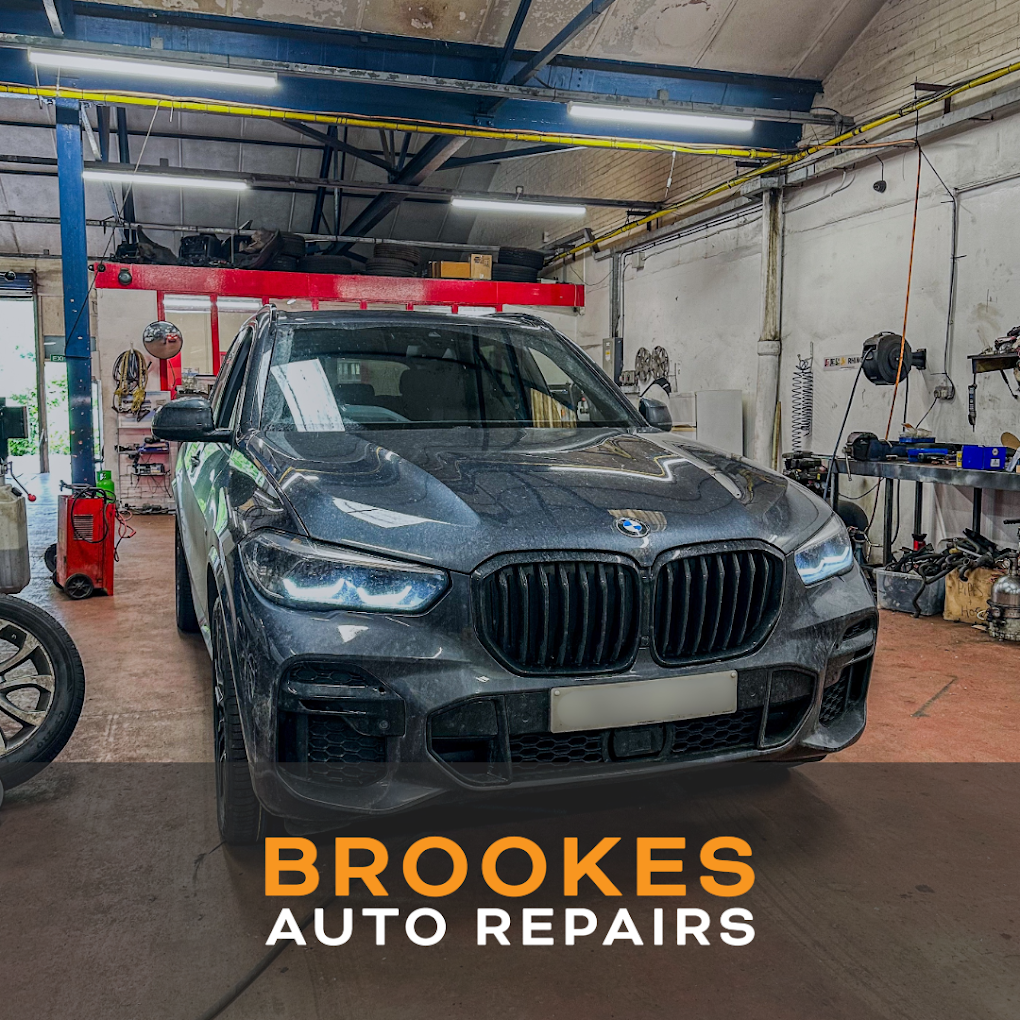
There’s also the matter of accountability. An independent garage in a small community lives or dies by its local reputation. There’s no national marketing budget to absorb the fallout from poor work or a dishonest quote. Brookes Auto Repairs, based in Ystradgynlais and serving the wider Swansea Valley, operates with exactly that kind of stake in the ground, a garage embedded in the same community as the people it serves, with a track record built on straightforward advice and practical solutions.
Is an independent garage better than a dealership for finding one you can trust?
Accreditation isn’t everything, but it’s a useful starting point. In the UK, look for garages that hold memberships with recognised bodies: Good Garage Scheme membership, RAC or AA Approved Garage status, IMI (Institute of the Motor Industry) registered technicians, or RMI (Retail Motor Industry Federation) membership. Each involves a degree of vetting, through audits, codes of conduct, or ongoing professional development requirements. None of them guarantee perfection, but they signal that a garage takes its standards seriously.
Before you hand over your keys, ask the following:
- Are your technicians IMI-registered or trained for this type of work?
- Do you use OEM or OEM-equivalent parts, and can I see the documentation?
- Do you offer awarranty on parts and labour?
- Can I get a written quote before work starts?
A reputable garage will answer all of these without hesitation. They won’t pressure you to approve additional work on the spot, and they won’t give you a vague verbal estimate with nothing in writing.
Walk away from any garage that can’t provide a written quote upfront, refuses to explain what was done and why, or becomes evasive when you ask about parts sourcing. These patterns appear at both independents and dealerships, knowing what to watch for keeps you protected either way.
The verdict: independent garage vs dealership, which suits your situation?
For most drivers with cars out of manufacturer warranty, a reputable independent garage is the better choice. The cost savings are real, typically 25 to 40 percent per job. The service is more personal and the accountability more direct. Consumer data supports this: a 2025 survey of nearly 11,000 car owners, cited by industry analysts tracking UK and US servicing trends, rated independent shops highest across price, honesty, and quality. That’s not a fluke.
Dealerships earn their place for specific situations: cars still under manufacturer warranty, recall work, and software-gated tasks on newer vehicles that require OEM access. If your car falls into those categories, use a dealer. If it doesn’t, you’re paying a premium for a badge on the building rather than better work under the bonnet.
The real question was never “independent or dealer” in the abstract. When weighing up independent garage vs dealership, what matters is whether the specific garage you’re considering has qualified technicians, proper documentation practices, and a genuine stake in doing the job right. For drivers across the Swansea Valley and South Wales, Brookes Auto Repairs in Ystradgynlais is exactly that kind of garage, experienced, straightforward, and rooted in the same community as the people they work for. If you want a quote or a second opinion, see their Car servicing at Brookes Auto Repair page for services and contact details.